
Citizens: Fear, Loyalty, Relationships, and Rebellion
Fear is not the whole colony. Read loyalty, relationships, status, workload, and unmet needs together before changing policy.
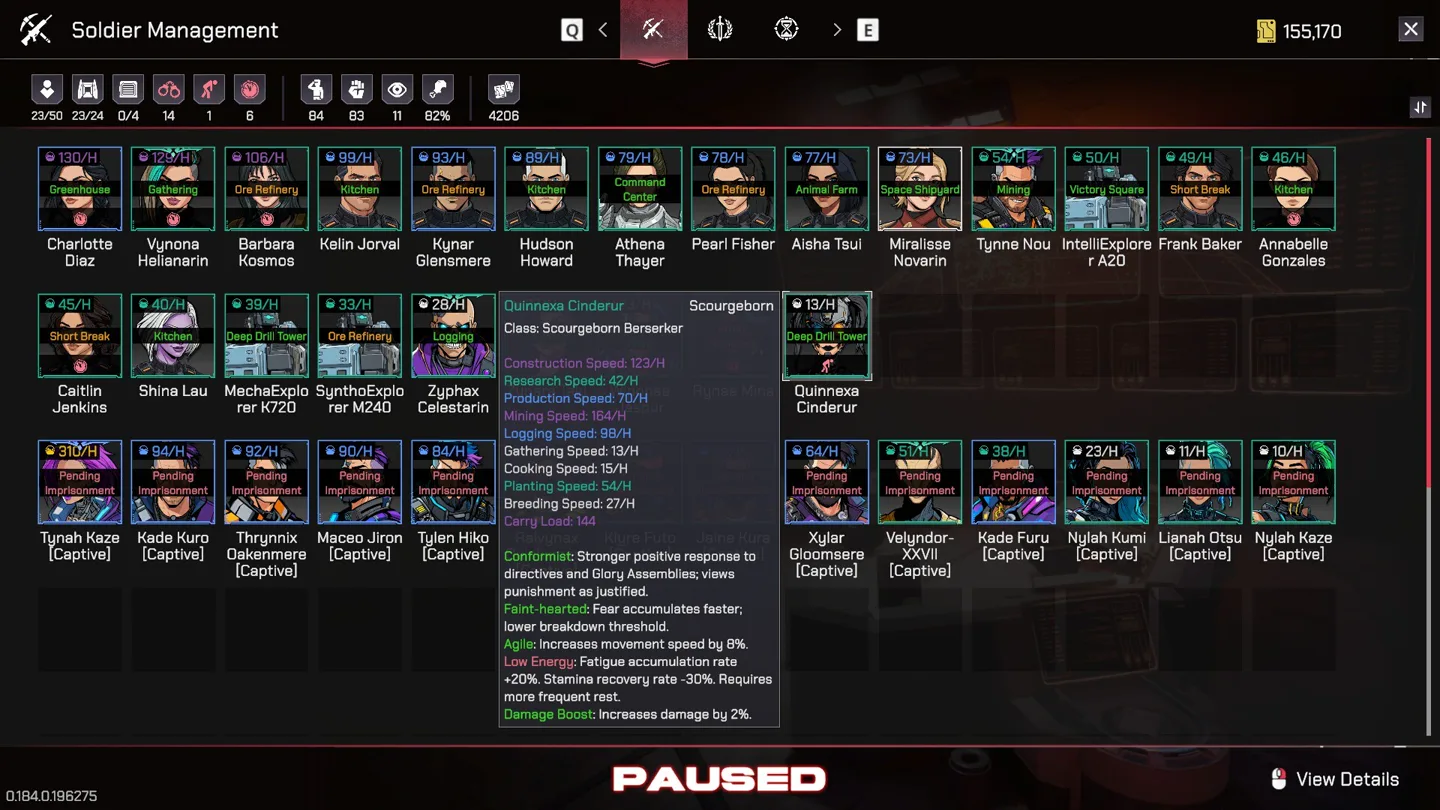
Table of contents
Citizens are not a single fear meter. The current game loop connects fear, loyalty, relationships, work, personal status, and rebellion. A change that pushes one signal in the desired direction can damage another, so diagnose the pattern before reaching for a colony-wide response.
Read the problem at three levels
Individual
Open the relevant management view and inspect the person’s status and aptitude. Ask whether the issue follows one individual: aging, assignment mismatch, captivity, injury, or a relationship problem.
Work group
If several people attached to one building are affected, inspect the job. The likely cause may be workload, missing inputs, blocked output, or the wrong workers rather than government policy.
Colony
If the pattern spans unrelated jobs and locations, examine shared needs, housing, logistics, policy effects, and the broader fear/loyalty balance.
| Pattern | First check | Avoid |
|---|---|---|
| One citizen | Status, assignment, relationships | A colony-wide law change |
| One workplace | Inputs, output space, staffing, travel | Punishing every worker |
| One resource class | Production chain and hauling | Building duplicates before tracing flow |
| Colony-wide shift | Needs, policy, fear, loyalty | Treating fear as the only variable |
Fear and loyalty answer different questions
Fear can make a regime legible and coercive, but it is not a substitute for a working colony. Loyalty reflects a different relationship with rule. The game also models relationships between citizens, which means unrest can spread through social structure rather than only through an isolated meter.
Use four questions before changing course:
- Is the colony failing to provide something concrete?
- Did a recent policy or punishment create the shift?
- Is the problem concentrated in a relationship or work group?
- Can you afford the production and loyalty effects of the proposed response?
The current public screens do not expose a complete hidden formula or a safe universal rebellion threshold. Any exact threshold presented without a current in-game readout should be treated cautiously.
A rebellion-response ladder
Start with the least disruptive action that addresses the cause.
- Restore a blocked basic flow. A missing need can look political while its cause is storage, hauling, or staffing.
- Correct assignment mismatch. Move a citizen when aptitude and work do not fit, but keep the vacated role covered.
- Review the latest policy. Check its intended benefit, affected group, duration, and recovery cost in Policies and Laws.
- Separate the local problem from the colony. A relationship cluster may need a different response from general discontent.
- Prepare for escalation. If rebellion risk continues to rise, protect critical production and field-capable personnel rather than pretending one meter guarantees control.
Work aptitude is not political loyalty
The assignment screen separates mining, logging, gathering, production, construction, research, cooking, planting, breeding, and carry load. Use those attributes to answer “who can do this work well?” They do not answer “who is safe, loyal, or suited to combat?”
A resilient staffing plan keeps those decisions separate:
- Assign critical work by aptitude and current need.
- Preserve substitutes for hauling, food, and construction.
- Monitor Aged or otherwise changed statuses over time.
- Revisit policy and relationship effects after major assignments.
- Treat field command and colony labor as two views of the same population, not the same optimization problem.
The practical assignment flow is covered in Jobs and Production, while Soldiers and Squad Roles separates colony work from field responsibility.
Prisoners enter the same population system
Captured enemies do not stop being a systems problem when combat ends. Holding space, conversion intent, labor needs, and risk all connect to citizen management. Decide the desired outcome before filling capacity. The confirmed flow and its unknown thresholds are mapped in Prisoners.
Quick diagnosis checklist
- Which level is affected: individual, work group, or colony?
- What changed immediately before the signal moved?
- Is a physical shortage or blocked route producing a political symptom?
- Are fear, loyalty, relationship, status, and assignment telling the same story?
- What is the smallest reversible response?
- Which critical job needs a backup if the situation escalates?
If you cannot answer the first two questions, keep observing. A dramatic policy is not more informed simply because it is available.
Related guides
Policies and Laws: A Decision Guide, Not a Tier List
Read prerequisites and costs, test a policy against your colony bottleneck, and plan a rollback.
Read guideJobs and Production: Diagnose the Bottleneck
Match visible work attributes to jobs and trace stalled production from input to worker to output.
Read guidePrisoners: Capture, Hold, Convert, or Spend
Follow the confirmed prisoner loop while keeping unexposed thresholds and timers out of the plan.
Read guide